At HOSHINOYA Kyoto in Arashiyama, the dish that marks autumn is a venison hot pot named after a leaf. Venison was a delicacy among Heian nobles until Buddhist influence pushed it off respectable tables, and the meat survived under the name momiji, the Japanese word for maple. The ryokan now serves it on the first night of its Signature Autumn Stay, a two-night program offered to a single party of no more than two guests each day between November 15 and December 10. It costs 258,000 yen ($1,634) for a couple, plus a room rate starting at 227,000 yen ($1,438) per night, and bookings close 10 days before arrival.
The program also immerses guests in Arashiyama’s cultural traditions, where Heian nobles once built villas and composed poems about the changing seasons. Guests receive an introduction to the Ogura Hyakunin Isshu poetry anthology from Michiko Takemoto, vice director of the Saga Arashiyama Museum of Literary Arts, and enjoy seasonal dining and private cultural experiences throughout their stay.
Why The Calendar Moves Every Year
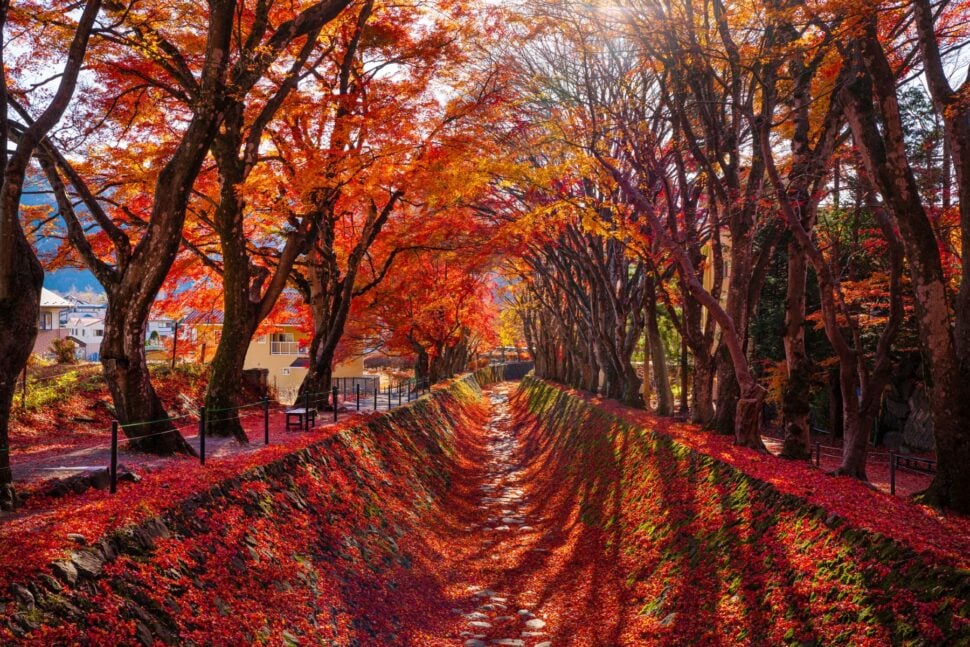
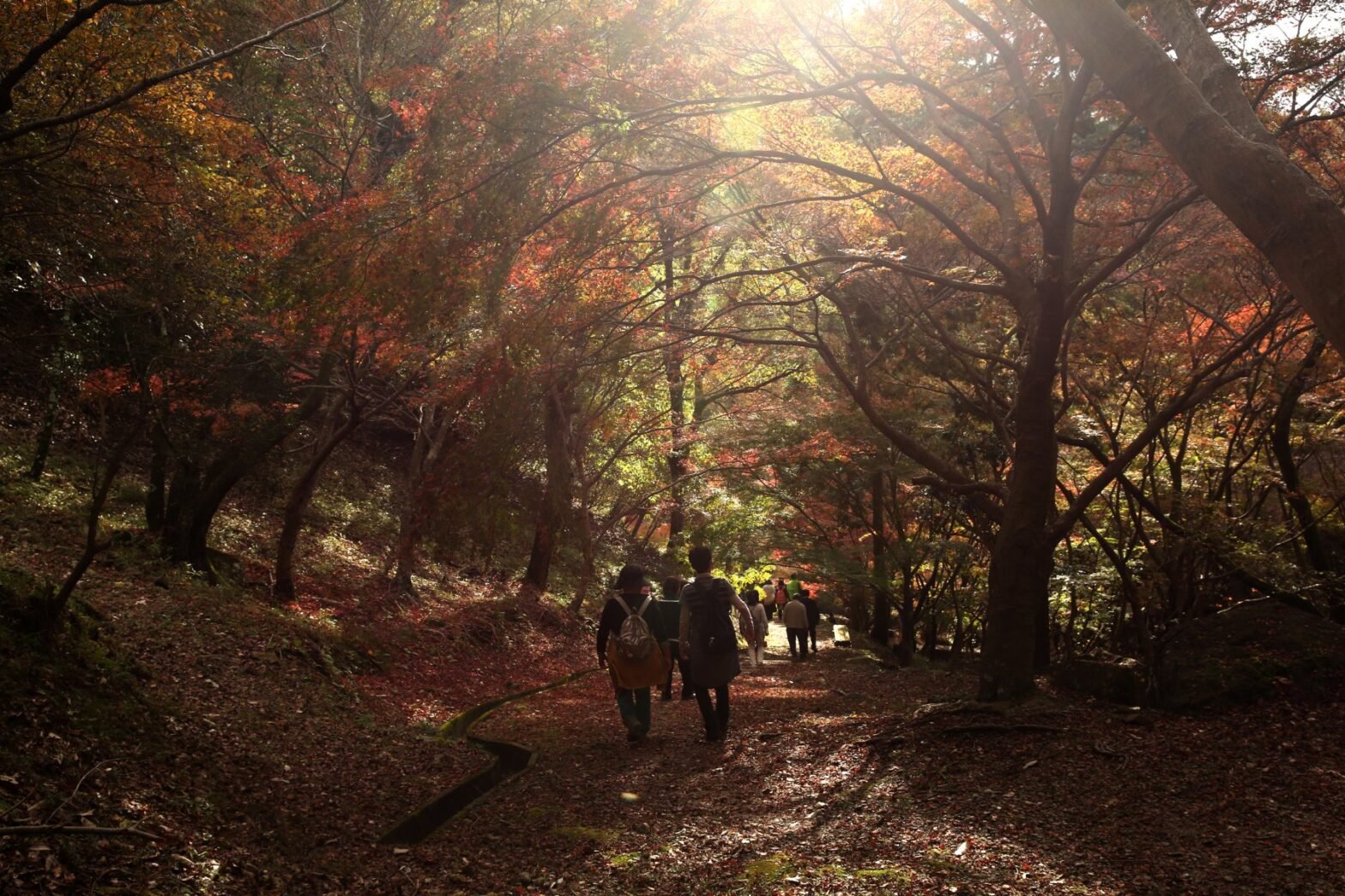
Japanese forecasters track red maples and yellow ginkgo separately, and in 2026 they’re on different schedules. The Japan Meteorological Corporation’s October 1 forecast puts Tokyo’s red-leaf date at November 28 and Kyoto’s at December 11, six days behind Kyoto’s average, with ginkgo arriving around November 26 in Tokyo and November 27 in Kyoto. The corporation measures the “first day in which most parts of the tree’s leaves turn red (yellow)” on official sample trees.
Individual temple gardens follow their own timing. Forest Travel, a Miami-based luxury agency, says its advisors’ experience puts peak color in Kyoto’s Higashiyama corridor between November 15 and 25 in a typical year, shifting by four to seven days. Those dates come from Forest Travel’s experience in previous years, while the official 2026 forecast points to later foliage. For 2026, late November in Tokyo and early December in Kyoto more closely align with the expected red maple season.
Stay Somewhere Worth The Trip
North of Kyoto’s city center, Aman Kyoto keeps 26 rooms and suites inside a private forest near Kinkaku-ji. Its 165-square-meter Takagamine Suite includes a tatami room facing Mount Hiei, along with private transfers and access to the spa’s onsen baths. The forest setting gives guests a view of the changing season without leaving the property, an appeal shared by HOSHINOYA Kyoto farther west in Arashiyama, where the Oi River runs past all 25 rooms.
Guests at HOSHINOYA arrive by boat from Togetsukyo Bridge, and the ryokan’s autumn program includes breakfast in the Floating Tearoom overlooking Mount Ogura’s foliage. For a more traditional ryokan stay, Hiiragiya has welcomed guests in downtown Kyoto since 1818. Located across the street from Tawaraya, it has 15 rooms in its sukiya-style main building and seven in a newer wing. Its baths are carved from Japanese umbrella pine and filled with groundwater from beneath the property, and nightly rates start at 73,000 yen ($461.69) per person, including kaiseki dinner and breakfast, before tax.
Tokyo has its own garden retreat in Bunkyo, where Hotel Chinzanso Tokyo occupies a former feudal lord’s estate. Its iroha maples turn red across the grounds while the hotel releases a manufactured mist it calls the Tokyo Sea of Clouds. The hotel’s 83-square-meter Prime Deluxe Garden Suite overlooks the garden through wide windows.
Make The Cultural Experience Private
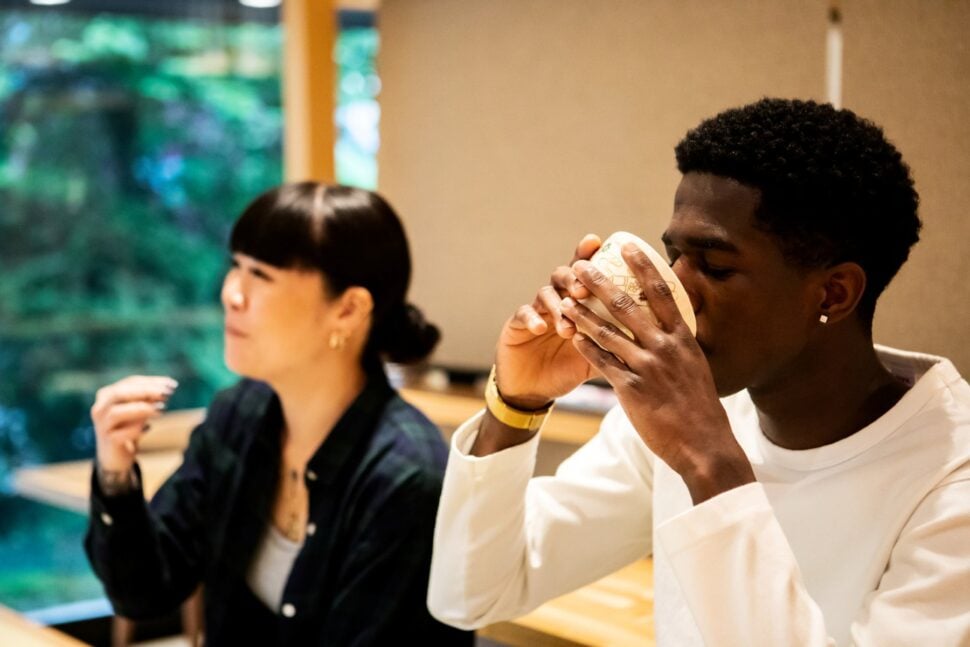
Zabosai Sen Soshitsu, the 16th-generation grand master of the Urasenke tea school, named Aman Kyoto’s Tea House Senkutsu. Hotel guests enter its tatami room through a low doorway for a tea-master-guided ceremony, booked seven days ahead, for 50,000 yen ($317) for up to two people or 100,000 yen ($634) with lunch.
HOSHINOYA’s program adds a private incense workshop with Yamadamatsu Kobokuten, a historic Kyoto incense house. Forest Travel advertises an early-morning private opening of Rurikō-in, before general visitors arrive during the week its maple display peaks. The arrangement is subject to temple approval, and the agency advises requesting it by June for November travel.
Book The Table Before You Book The Flight
Arashiyama’s landmark table belongs to Kyoto Kitcho Arashiyama, where third-generation chef Kunio Tokuoka serves kaiseki. High-season pricing began October 1, with lunch starting at 66,000 yen ($418) per person, including tax and service. The chef’s omakase course rises to at least 129,360 yen ($820) through February as matsutake and crab come into season. The restaurant asks diners to reserve early for November and charges cancellation fees from five days out.
In Higashiyama, Kikunoi Honten descends from a family of tea attendants who tended the well Kita no Mandokoro, wife of Toyotomi Hideyoshi, drew on for tea. Opened as a restaurant in 1912 and holding three Michelin stars, it serves dinner in 10 private rooms for 33,000 to 110,000 yen ($209–$697), plus a 15 percent service charge. Overseas guests book through its English site. The family’s cooking continues in Tokyo at Akasaka Kikunoi, its two-Michelin-star outpost. byFood accepts reservation requests and refunds cancellations made at least a week ahead.
How Far Ahead to Plan
Forest Travel advises securing luxury hotels in Kyoto’s Okazaki and Higashiyama neighborhoods by April for November dates. Most starred Tokyo restaurants release tables 30 to 90 days ahead, according to Asia Undiscovered, and luxury hotel concierges hold relationships with counters that accept no public bookings. At Gion Loka in Kyoto’s Sowaka hotel, reservations open three months ahead and run through the end of the month, with credit card preauthorization and a 50 percent cancellation fee the day before.
What A Luxury Momiji Trip Costs
Two nights at HOSHINOYA Kyoto in the Signature Autumn Stay start at least 712,000 yen ($4,511) for a couple. A main-building room for two at Hiiragiya starts at 146,000 yen ($925) a night before tax, a Senkutsu tea ceremony with lunch adds 100,000 yen ($634), and a high-season lunch for two at Kitcho Arashiyama comes to 132,000 yen ($836). Forest Travel prices a seven-day private autumn journey in Kyoto from roughly $12,800 per traveler, based on double occupancy.
The Last Morning In Arashiyama
On the third day of HOSHINOYA’s program, guests begin their morning with breathing exercises beneath a maple in the privately reserved Back Garden. Breakfast and seasonal confections follow, then guests board the Hisui houseboat for departure. The boat carries them down the Oi River through Oku-Arashiyama, where the surrounding mountains and forests offer one final view of the autumn foliage that draws visitors to Kyoto each year.