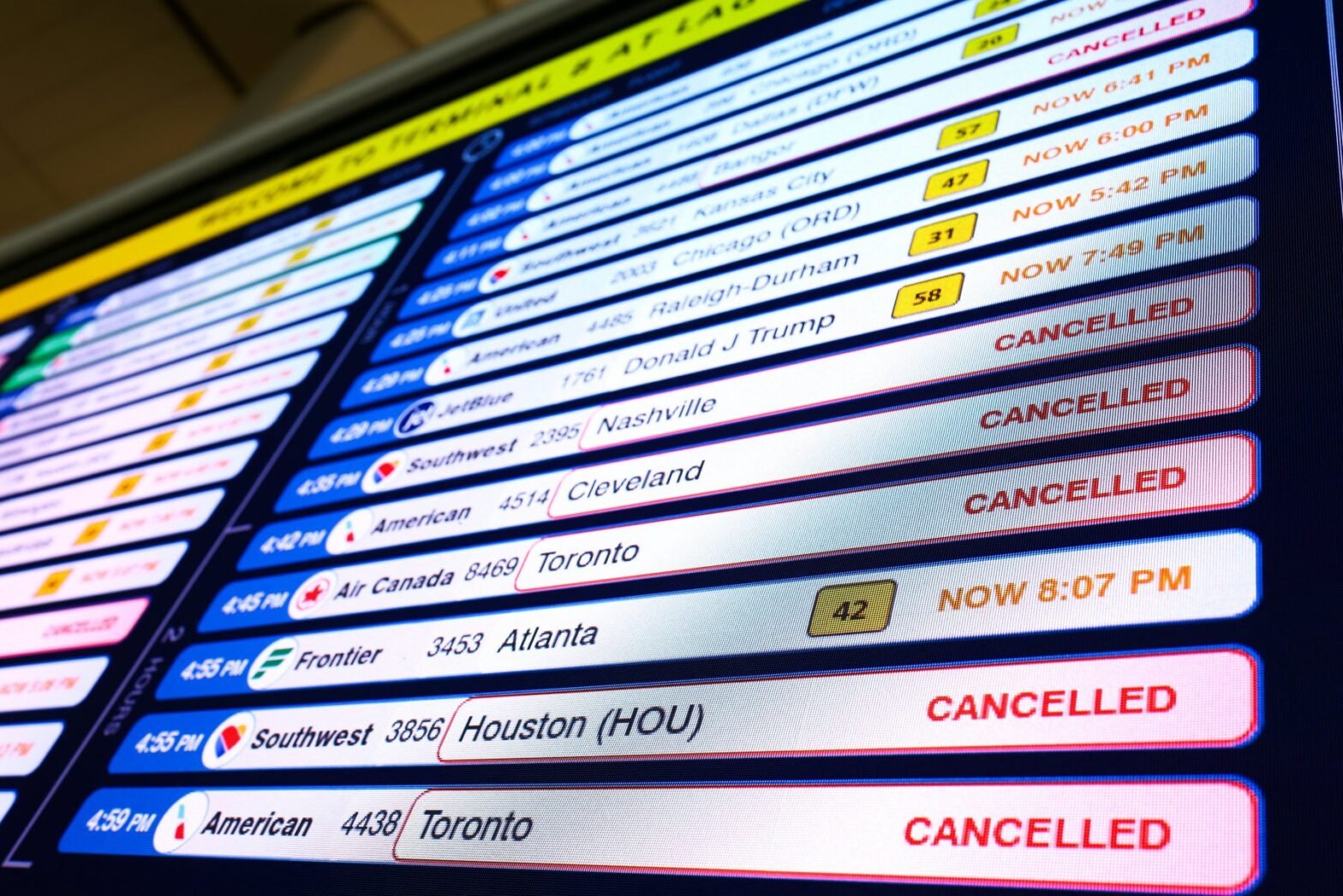
When a flight is canceled or seriously delayed, the reason an airline gives can determine whether a stranded passenger receives more than a new itinerary. Major U.S. carriers publish customer service commitments covering disruptions considered within the airline’s control, and those commitments can include meal vouchers, hotel rooms, ground transportation, and free rebooking. The U.S. Department of Transportation (DOT) also uses the cause of a disruption when compiling federal airline performance data.
Beginning October 19, 2026, some events that have historically fallen under the “Air Carrier” reporting category will instead be placed in a new category created under Section 511(b) of the FAA Reauthorization Act of 2024. Airlines generally reserve meal vouchers, hotel rooms, ground transportation, and similar assistance for disruptions they classify as within their control. Once the new rule takes effect, some delays and cancellations that previously fell into that category will no longer do so, which could leave passengers without benefits they might have received before.
New DOT Airline Delay Category Covers 10 Specific Causes
The DOT’s final rule, published on September 3, requires reporting airlines to remove 10 specified causes of delays and cancellations from the “Air Carrier” code, which the agency reserves for circumstances within a carrier’s control. The department will create a separate “Section 511(b)” category for those events. The change implements a provision Congress included in the FAA Reauthorization Act of 2024.
The 10 causes include aircraft cleaning after a passenger dies; aircraft damage caused by extreme weather, foreign object debris, or sabotage; certain baggage-system outages outside an airline’s control; qualifying cybersecurity attacks; unexpected government-system failures affecting safe operations; overheated brakes following a safety incident; certain unscheduled maintenance; medical emergencies not caused by the airline; removal of an unruly passenger; and airport closures caused by volcanic ash, wind, or wind shear.
The maintenance exclusion applies to unscheduled work outside a scheduled maintenance program when the repair cannot be deferred or must be completed before flight. Qualifying cybersecurity incidents also fall under the new category only when the airline complies with applicable cybersecurity requirements. DOT said the new category will ensure that reported data reflects “the statutory distinction between carrier-controllable events and the specific exclusions identified by Congress.”
Meals And Hotels May Change, But Airline Refund Rights Remain
The classification change could affect what passengers receive, since many airline customer service commitments apply only to disruptions considered within the carrier’s control. The DOT’s Airline Cancellation and Delay Dashboard shows which carriers promise rebooking, meal vouchers, hotel accommodations, and ground transportation during qualifying controllable disruptions. Airlines must honor the commitments in their customer service plans.
In its economic analysis, DOT said it expects “the total value of amenities and compensation currently provided by air carriers to consumers” to decrease because the 10 causes will no longer fall within the Air Carrier category. The department also expects fewer delays and cancellations to qualify for those benefits. However, it said it cannot reliably estimate the size of the reduction because it does not know how often the 10 excluded causes occur.
Federal refund rights remain separate. Under DOT refund rules, airlines must provide a prompt refund when they cancel a flight or make a qualifying significant change, and the passenger is not offered or rejects alternative transportation, a travel credit, voucher, or other compensation. The reason for the cancellation does not remove that right.
After October 19, travelers should distinguish between a legally required refund and additional assistance promised for controllable disruptions. A delay or cancellation placed in the new Section 511(b) category may no longer qualify for some airline-provided benefits. In contrast, eligible passengers who decline an alternative after a cancellation or significant change can still retain their refund rights.